Selected work

Past Oral History and Documentary Projects

Stories already on the record. The films and interviews below show the craft and care behind every oral history project we take on.

Request a Proposal
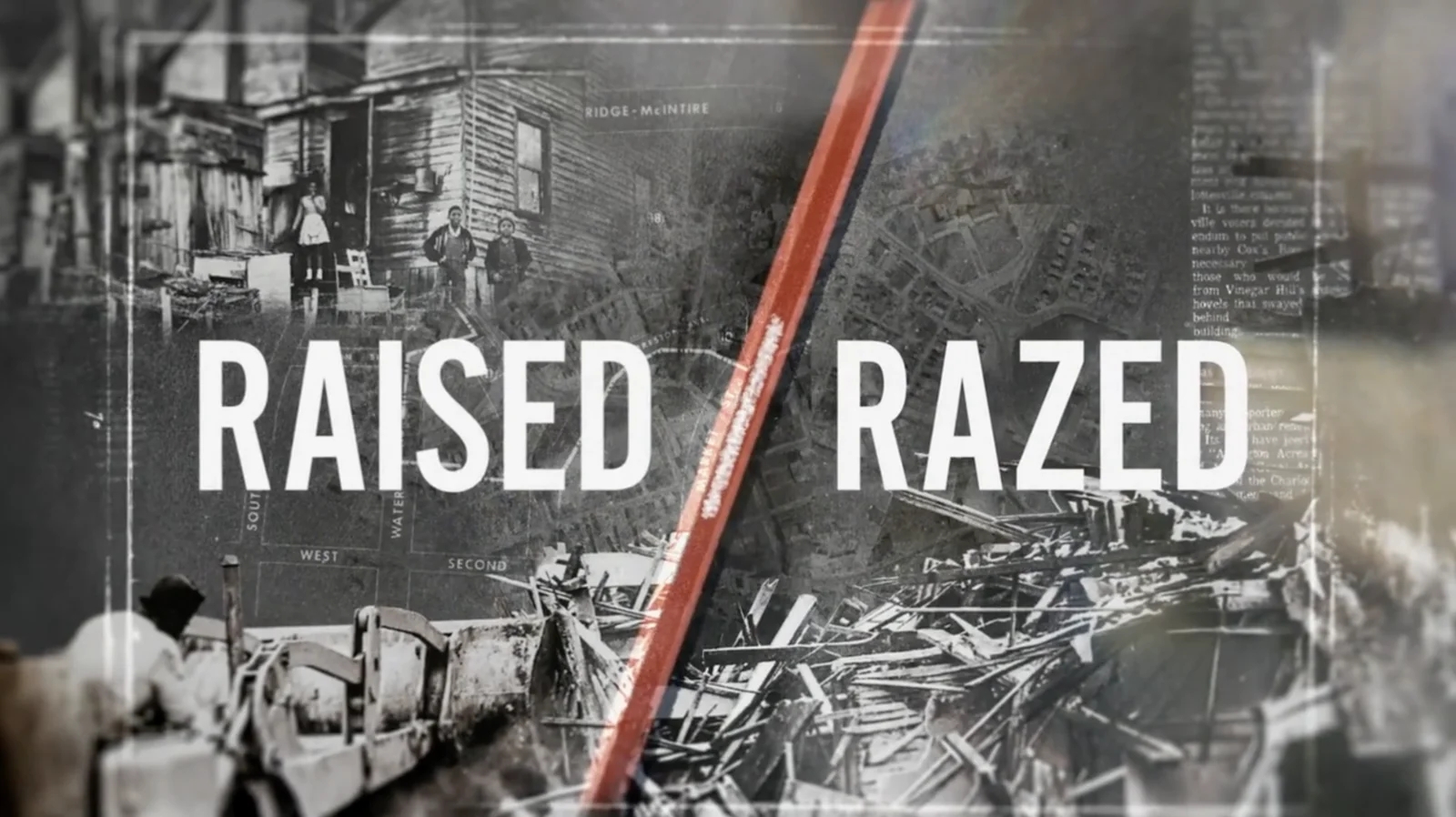
Raised/Razed documentary title over archival photographs of Charlottesville neighborhoods and urban renewal demolition
Raised/Razed. Emmy Award. Distributed via American Public Television/PBS.

Raised/Razed

Raised/Razed is an Emmy Award-winning documentary on urban renewal, distributed nationally via American Public Television/PBS, with an accompanying curriculum. A documentary and its curriculum offer different ways to encounter history: through a finished film and through material for teaching. They also invite institutions to consider how a recording project might be used beyond its initial presentation.

For institutions, it is a model of what happens when careful interviews meet broadcast-quality production: a work that serves families, students, and researchers at once. [LORENZO: add any details you want to share about the number of narrators or the research behind the film]

Cash Crop

Cash Crop is a Telly Award-winning documentary distributed nationally via American Public Television/PBS. Like Raised/Razed, it is part of the documentary work presented here alongside oral history services. [LORENZO: add a one-sentence summary of Cash Crop in your own words, including its subject and how interviews contributed to the film]

The Albemarle 26

The Albemarle 26 have been recognized with three Virginia State historic markers. This work shows how testimony, gathered carefully and shared responsibly, can become part of the permanent public record of a place. [LORENZO: add your preferred description of your role and of who the Albemarle 26 are] Communities considering similar work can read about our approach with descendant communities and with museums and historical societies.

400+ interviews and counting

Behind the films is a long practice of listening. Lorenzo Dickerson has conducted 400+ oral history interviews with descendants of the enslaved, school desegregation pioneers, farmers, athletes, educators, and families affected by urban renewal. A new collection can be planned around the steps described on Our Process: plan, record, preserve, share.

More films are available at maupintown.com. [LORENZO: add any oral history collections you can name publicly, with permission]

What this means for your project

Not every oral history project becomes a broadcast documentary, and it does not need to. But the same standards apply to a church anniversary film, a university collection, or a family archive: written consent, patient interviews, broadcast-quality recording, and archive-ready delivery. Learn more about Maupintown Media or read the FAQ.

For a new project, listening to the people closest to the story helps establish what should be kept. Those first conversations can shape the narrator list, interview guides, consent decisions, and the ways a collection might be shared. The goal is to connect the finished work to the community and institution that made it possible.

Request a Proposal

Put your community's story on the record.

Tell us about the voices you want to keep and what you hope the collection will become.

Request a Proposal